
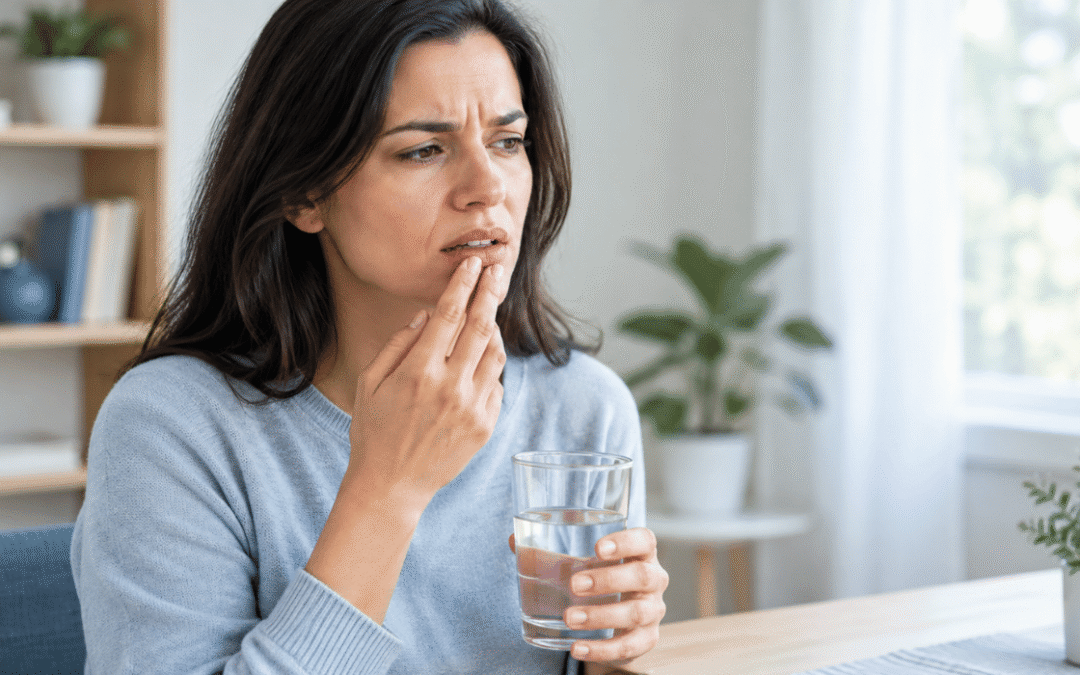
Waking up with a mouth that feels like it’s lined with cotton is something almost everyone experiences from time to time. Usually it passes within a few minutes of drinking water. But when that dry, sticky, uncomfortable feeling shows up regularly, day after day, it stops being a minor annoyance and starts being worth paying attention to.
Dry mouth, medically known as xerostomia, happens when your salivary glands aren’t producing enough saliva to keep your mouth properly moist. Saliva does more than you might realize. It helps break down food, protects your teeth, and keeps the tissues in your mouth comfortable. When it’s in short supply, the effects can reach further than just feeling thirsty.
What Causes Dry Mouth
Not Drinking Enough Water
This is the most straightforward and most common of all dry mouth causes. If your body doesn’t have enough fluid overall, saliva production naturally slows down. Hot weather, intense physical activity, or simply forgetting to drink water throughout the day can all lead to this kind of temporary dryness.
Breathing Through Your Mouth
Some people breathe through their mouth without realizing it, especially while sleeping. Nasal congestion, allergies, or certain sleep positions can push you toward mouth breathing, which dries out the tissue much faster than nasal breathing does. This is one of the more common explanations for waking up with a parched mouth.
Medications
A long list of medications lists dry mouth as a side effect, including certain options used for allergies, high blood pressure, anxiety, depression, and pain management. If dry mouth started around the same time you began a new prescription, that timing is a meaningful clue worth mentioning to your doctor or pharmacist.
Stress and Anxiety
Feeling nervous before a big presentation or during a stressful moment can trigger a temporary dry mouth sensation. This happens because the body’s stress response affects the nervous system signals that regulate saliva flow. Once the stress passes, saliva production typically returns to normal on its own.
Caffeine, Alcohol, and Tobacco Use
Caffeinated drinks and alcohol both have a drying effect on the body, and tobacco use irritates the tissues in the mouth while also reducing saliva flow. Frequent use of any of these can contribute to an ongoing dry mouth sensation that doesn’t fully resolve between uses.
Aging
Dry mouth becomes more common as people get older, partly due to natural changes in gland function and partly because older adults are more likely to take medications associated with the symptom. It’s not an inevitable part of aging, but it is more frequently reported in this age group.
Underlying Health Conditions
Certain health conditions are associated with reduced saliva production, including diabetes, autoimmune conditions such as Sjögren’s syndrome, and conditions that affect the nerves or glands involved in saliva production. Radiation treatment to the head or neck area can also affect the salivary glands. These causes tend to produce a more persistent, harder-to-resolve dryness compared to everyday triggers like dehydration.
Common Dry Mouth Symptoms
Beyond the dry feeling itself, dry mouth often shows up alongside a few other signs:
- A sticky or thick feeling in the mouth and throat
- Frequent thirst, even shortly after drinking water
- Cracked lips or a dry, rough tongue
- Difficulty chewing, swallowing, or speaking for long periods
- A change in taste or a persistent bad taste
- Bad breath that doesn’t improve with brushing
- Increased dental issues, since saliva normally helps protect teeth
If several of these are showing up together and lasting for weeks rather than days, it points toward something more than a single dehydrated afternoon.
Simple Ways to Support Saliva Production

For everyday, mild dry mouth, a few consistent habits can make a real difference. Sipping water steadily throughout the day, rather than large amounts all at once, tends to keep saliva flow more consistent. Chewing sugar-free gum or sucking on sugar-free lozenges can stimulate the glands to produce more saliva naturally.
Eating water-rich, plant-based foods such as cucumber, watermelon, celery, and citrus fruits can support hydration alongside your regular water intake. Using a humidifier in your bedroom, particularly during dry seasons, can also reduce the amount of moisture lost overnight through mouth breathing.
Cutting back on caffeine, alcohol, and tobacco, or at least being mindful of how much you’re using in a day, tends to ease the dryness for many people fairly quickly. Spicy, salty, or very dry foods can aggravate an already dry mouth, so balancing meals with more hydrating options can help too. Small adjustments like these fit naturally into a broader approach to healthy living at home, where simple daily habits, rather than drastic changes, end up making the biggest difference over time.
When Dry Mouth Signals Something More Serious
Occasional dry mouth after a workout or a stressful day usually isn’t cause for concern. It becomes worth a proper conversation with a healthcare provider or dentist when it’s persistent, when it interferes with eating, speaking, or sleeping, or when it’s paired with other symptoms like dry eyes, joint pain, or unexplained fatigue, since these can point toward an underlying condition that benefits from proper diagnosis.
It’s also worth mentioning to a doctor if dry mouth appeared after starting a new medication, since adjusting the dosage or switching options is sometimes possible under medical guidance. Self-treating a persistent case without understanding the root cause can mean missing an underlying issue that needs more direct attention.
Building Awareness of the Small Signals
It’s easy to treat something like dry mouth as background noise, especially when life is busy and there always seems to be something more urgent to focus on. But tuning into these smaller physical signals is a habit worth building, the same way you might build the habit of noticing when your energy dips or your mood shifts for no clear reason. Rajesh Chotalia explores this kind of everyday self-awareness in his New Age Indian Dad videos, where the focus often lands on the small, consistent choices that shape long-term well-being. You can find more of that perspective at New Age Indian Dad.
Final Thoughts
Dry mouth is common, and most of the time it’s tied to something simple like dehydration, mouth breathing, or a medication side effect. Paying attention to when it happens, how long it lasts, and what else comes with it gives you a much clearer picture of whether it’s a passing inconvenience or something to bring up with a professional. Staying hydrated, easing up on caffeine and alcohol, and choosing water-rich, whole foods are all realistic habits that support comfort in the mouth and overall wellness, which is very much the kind of steady, sustainable approach Simple Healthy Living Community encourages.
Frequently Asked Questions
Is dry mouth at night different from dry mouth during the day?
It often has a different primary cause. Nighttime dry mouth is frequently linked to mouth breathing or snoring during sleep, while daytime dry mouth is more commonly tied to hydration, medication, or stress.
Can dry mouth affect dental health?
Yes. Saliva helps neutralize acids and wash away food particles, so reduced saliva flow can increase the risk of cavities and gum irritation over time.
Does dry mouth go away on its own?
Mild, occasional dry mouth from dehydration or stress usually resolves once the trigger passes. Persistent dry mouth tied to medication or an underlying condition typically needs a targeted approach to improve.
Can anxiety alone cause chronic dry mouth?
Occasional stress can cause short episodes of dry mouth, but if it’s happening daily over an extended period, it’s worth ruling out other causes rather than assuming anxiety is the only factor.
Are there specific age groups more prone to dry mouth?
Older adults report it more frequently, largely due to medication use and natural changes in gland activity, though people of any age can experience it.
When should I see a dentist versus a doctor about dry mouth?
A dentist is a good starting point if you’re noticing dental symptoms like increased cavities or bad breath, while a doctor is better suited to investigate medication side effects or underlying health conditions.